

Biology Past Questions And Answers
421
Malaria symptoms are caused by
- A. toxins released into the blood as a result of the destruction of red blood cell
- B. the multiplication of the malaria sporozites in the liver
- C. the invasion of the red blood cells by the trophozoites
- D. the development of merozoites into gametocytes
422
Which of the following does not happen during inspiration?
- A. intercostal muscles contract
- B. Ribs move forward
- C. Thoracic cavity increases
- D. Diaphragm relaxes
423
The essential parts of the flower are labelled_______
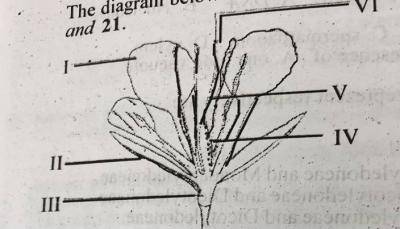
- A. I, II and III
- B. II, III and IV
- C. III, V and VI
- D. IV, V and VI
424
The gall bladder of mammal has a duct connected to the
- A. liver
- B. duodenum
- C. small intestine
- D. pancreas
425
A collection of achenes formed from several carpels of a flower is
- A. a multiple fruit
- B. an aggregate fruit
- C. a shizocarp
- D. a simple fruit
426
Etilolation is caused by the influence of
- A)O2
- B) water
- C) mineral salts
- D) light
427
The dark reaction of photosynthesis involves
- A. fixation of carbon (IV) oxide to give six-carbon sugar
- B. fixation of carbon (IV) oxide with the help of oxygen
- C. use of carbon (IV) oxide to produce glucose using ATP
- D. fixation of carbon (IV) oxide on chlorophyll using hydrogen
428
Hypogeal germination is characterized by the
- A. emergency of the plumule out of the ground
- B. provision of nourishment by the endosperm
- C. elongation of the hypocotyl
- D. elongation of the epicotyl
429
Which of the following organism has both plant and animal-like features
- A. Paramecium
- B. Euglena
- C. Amoeba
- D. Spirogyra
430
Which of the following organisms has homodont dentition?
- A. Rabbit
- B. Man
- C. Sheep
- D. Lizard