

Biology Past Questions And Answers
Which of the following factors is likely to increase the rate of transpiration in plants?
- A. A reduction in the number of stomata per unit surface area
- B. Increase in humidity around the leaves of plants
- C. An increase in leaf surface area to volume ratio
- D. Removal of leaves from plant
During the process of osmosis a semi-permeable membrane allows
- A. only solute molecules to pass through it
- B. both solute and solvent molecules to pass through it
- C. only solvent molecules to pass through it
- D. only gaseous molecules to pass through it
a. Statethreefeatures of the small intestine that increase the rate of absorption of digested food. [3 marks]
b. Explainbrieflywhat happens to the glucose formed in a plant during photosynthesis. [3 marks]
c. Explainbrieflythe mode of feeding in each of the following organisms:
(i) Euglena; [4 marks]
(ii) Spirogyra. [4 marks]
d. Statethree characteristics of an Estuarine habitat. [3 marks]
e. Statethree differences between an aquatic habitat and a terrestrial habitat. [3 marks]
View Discussion (0)WAEC 2019 THEORYWhich of the following statements about the transfer of energy in the ecosystem is correct?
- A. energy increases at high trophic levels
- B. More organisms can be supported at higher levels
- C. There are fewer organisms at top tropic levels
- D. Energy is lost at each trophic level
Which of the following organs regulates the levels of water. salts, hydrogen ions, and urea in the mammals?
- A. Kidney
- B. Colon
- C. Bladder
- D. Liver
The following organisms are consumers except
- A. earthworm
- B. spirogyra
- C. bacteria
- D. Rhizopus
Growing radicles of seddlings are
- A. negatively phototropic
- B. positively phototropic
- C. negatively geotropic
- D. negatively hydrotropic
The sequence of the one-way gaseous exchange mechanism in a fish is
- A. operculum → gills → mouth
- B. gills → operculum → mouth
- C. mouth → operculum → gils
- D. mouth → gills → operculum
The element that is essential for the coagulation of blood is
- A. potassium
- B. calcium
- C. phosphorus
- D. iron
The organism below is?
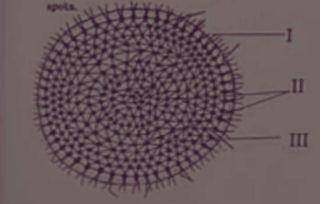
- A. chlamydomenas
- B. algae
- C. volvox
- D. euglena