

Biology Past Questions And Answers
Which of the following instruments is used to measure wind speed?
- A. Thermometer
- B. Barometer
- C. Hygrometer
- D. Anemometer
The process by which plants and animals are modified in structure, physiology and behavior in order to survive is known as
- A) evolution
- B) adaptation
- C) succession
- D) hibernation
Which of the following describes an example of fertilization in higher organisms?
- A. Fusion of sperm and egg nuclei
- B. Ejaculating of sperm into a female body
- C. Male gametes germinating in the pollen tube
- D. A pollen grain landing on a sticky stigma
Which of the following enzymes performs the critical function of removing RNA primers from DNA in DNA replication, and replacing the RNA with DNA?
- A. DNA polymerase III
- B. DNA polymerase I
- C. Ligase
- D. DNA polymerase II
Toads and lizards in an ecosystem depend on a limited quantity of food. This is an example of n
- A. parasitism
- B. intraspecific competition
- C. predation
- D. interspecific competitio
What can affect the productivity of an enzyme?
- A. Both pH and temperature
- B. None of these
- C. Temperature
- D. pH
The diagram below are illustrations of two different cells involved in biological processing in mammals. Study them and answer this question.
Which of the following statements about P and Q is correct?
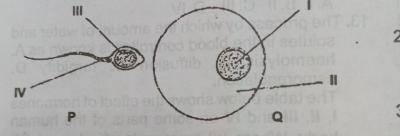
- A. Both cells are structures for asexual reproduction
- B. Both cells normally belong to the same individual
- C. Both cells are found in plants
- D. The union of both cells gives rise to a new mammal
The secchi disc is used to measure
- A. speed of flow of water
- B. specific gravity of water
- C. turbidity of water
- D. depth of water
(a) Describe briefly the female reproductive system of a named mammal. (A diagram is essential).
(b) List three differences between reproduction in mammals and in amphibians.
(c) Describe the structure and function of the male reproductive organ of a flowering plant.
View Discussion (0)WAEC 1992 THEORY(a) Explain the following terms:
(i) disease
(ii) symptoms of diseases.
(b)(i) List two physical and two chemical barriers that prevent pathogens from penetrating the body of an organism.
(ii) Explain how vaccination protects the body from contracting infectious diseases.
(c) Distinguish between an antibody and a antigen.
(d) Name the causative agents of:
(i) Malaria
(ii) Cholera
(iii) AIDS.
View Discussion (0)WAEC 2012 THEORY