

Biology Past Questions And Answers
Which of the following organisms has a symbiotic relationship with green algae?
- A. Amoeba
- B. Paramecium
- D. Euglena
- C. Hydra
The diagram below is an illustration of a part of a flower. Study it and answer the question below. The part labeled II is the
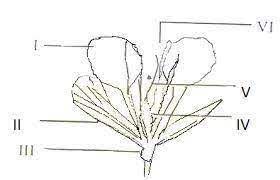
- A. unfused stigma
- B. fused style
- C. fused ovaries
- D. unfused anther
In which of the following multicellular organisms is-interdependence of cells maintained?
- A. Spirogyra
- B. Volvox
- C. Eudorina
- D. Pandorina
The end products of the digestion of fats and oils in mammals are
- A. maltose and fatty acid
- B. amino acids and glucose
- C. fatty acid and fructose
- D. fatty acids and glycerin
The enzymes of the glycolytic pathway are located in the?
- A. mitochondria
- B. gastric juice
- C. plasma
- D. cytoplasm
Deamination occurs in
- A) Kidney
- B) Pancreas
- C) Spleen
- D) Liver
A phenotypic character with intermediate forms that can be graded from one extreme to the other is referred to as
- A. discontinuous variation
- B. continuous variation
- C. a mutant
- D. a genome
In mammals, which type of phenotypic expression will show recessive traits more frequently in males than females?
- A. Co-dominance
- B. Incomplete dominance
- C. Complete dominance
- D. X-linked
which of the following features is not an adaptation?
- A. Breathing roots for entry air
- B. flowers are raised above water to attract pollinators
- C. spongy tissues containing gases for boyancy
- D. hairy structures on the leaves to reduce water loss
Which of the following is the most complex according to their cellular level of organization?
- A. Heart
- B. Hair
- C. Euglena
- D. Hydra