

Biology Past Questions And Answers
The organ situated in the pericardia cavity of a mammal is the
- A. heart
- B. liver
- C. stomach
- D. spleen
Most monocots are easily recognized by their
- A. short leaves with petioles
- B. long and sword-like leaves
- C. long and palm like leaves
- D. short with veinlets
The structure in the cell that controls the movement of substances in and out of the cell is the
- A. cytoplasmic membrane
- B. nuclear membrane
- C. cytoplasm
- D. protoplasm
The conversion of a nutrient into a molecule in the body of a consumer is referred to as
- A. digestion
- B. assimilation
- C. absorption
- D. inhibition
A child with blood group genotype different from those of both parents and with a mother of genotype OO, can only have a father of genotype
- A) A
- B) B
- C) OO
- D) AB
For each molecule of glucose, how many ATP are produced by the Citric Acid Cycle?
- A. 2 ATP
- B. 6 ATP
- C. 3 ATP
- D. 4 ATP
In the diagram below, the part labeled a is the
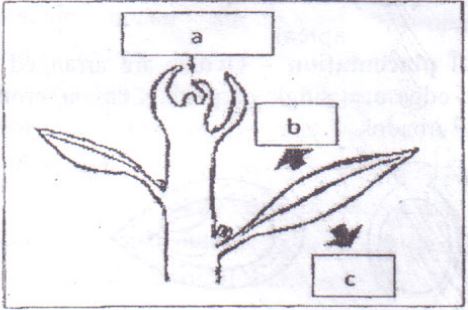
- A) apex
- B) fruit
- C) apical meristem
- D) flower
In relation to natural selection, which of the following birds would be considered to be the most fit?
- A. A male with a genetic defect that prevents him from reproducing
- B. A female that hatched and successfully raised a daughter
- C. A young female that lays 3 eggs, all of which are eaten by a predator
- D. A deceased male that had successfully mated with multiple females, resulting in healthy offspring
Which of the following methods does not make water fit for drinking?
- A. Addition of chlorine
- B. Boiling
- C. Distillation
- D. Addition of alum
Floating microscopic heterotrophs are mostly grouped as
- A. phytoplankton
- B. zooplankton
- C. microbes
- D. nekton