

Economics Past Questions And Answers
The above diagram showing the maximum possible combination of commodities X and Y produced in Nigeria is called the
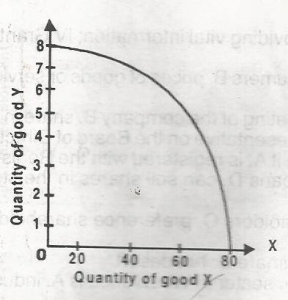
- A. Production indicator
- B. Maximum production curve
- C. Production possibility curve
- D. Total output curve
At optimum population level, a country has its
- A. maximum population
- B. ageing population
- C. highest birth rate
- D. highest output per head
the return of investment that is just sufficient to satisfy the owner of a business is called?
- A. economic profit
- B. business profit
- C. normal profit
- D. excess profit
The basic purpose of imposing legal reserve requirements on commercial bank is to?
- A. assure the profitability of commercial banks
- B. provide a device through which credit creation by banks can be controlled
- C. provide a proper ratio between earning and non-earning bank assets
- D. provide the Central Bank with working capital
Price tends towards the level which equates supply with demand'. Explain this statement.
.jpg)
A galvanometer of internal resistance 50\(\Omega\) has a full scale deflection for a current of 5mA. What is the resistance required to covert it to a voltmeter with full scale deflection of 10V?
- A. 1750\(\Omega\)
- B. 1950\(\Omega\)
- C. 2000\(\Omega\)
- D. 2500\(\Omega\)
Wages are to some extent determine by the
- A. Marginal utility of labour
- B. Marginal productivity of labour
- C. Average productivity of labour
- D. Total productivity of labour
The current stage of the economy is depicted in curve I. The movement of curve I to II suggests___________
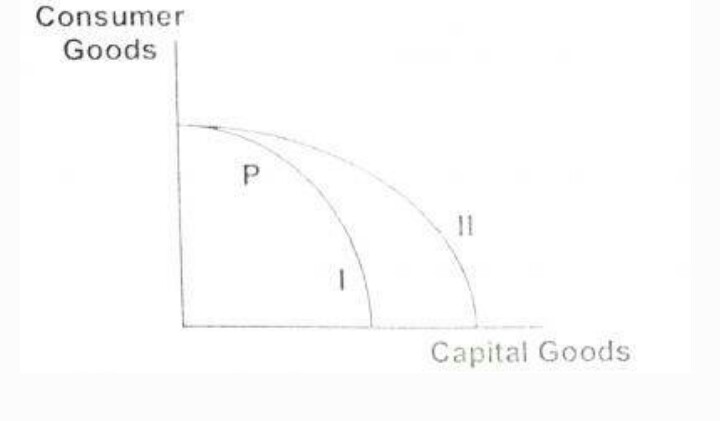
- A. an Improvement in capital goods technology but not In consumer goods technology
- B. a movement from unemployment to full employment
- C. that the output for the society has declined
- D. a gain in consumer goods technique and not in capital goods technique
What is the lowest price the monopolist can charge
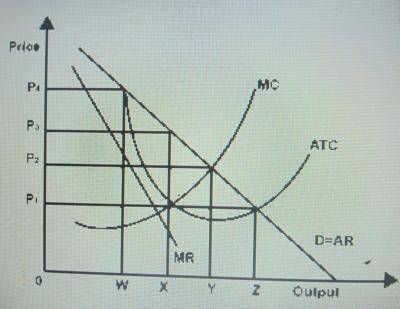
- A. P2
- B. P1
- C. P3
- D. P4
The three(3) major agents of an economic system are the:
- A) consumers, workers and producers
- B) individuals, firms and government
- C) politicians, bankers and entrepreneur
- D) consumers, producers and government