

Chemistry Past Questions And Answers
Determine the quantity of electricity used when a current of 0.20 amperes is passed through an electrolytic cell for 60 minutes.
- A. 120C
- B. 120C
- C. 360C
- D. 720C
Which two gases can be used for the demonstration of the fountain experiment?
- A) SO3 and NH3
- B) SO2 and NH3
- C) HCl and NH3
- D) SO2 and HCl
An ideal gas changing volume as temperature rises can be represented by gthe diagram below:
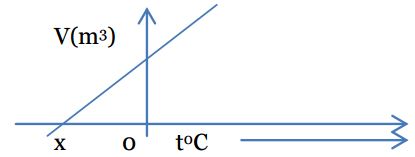
- A)-273 K
- B) 273 K
- C) 273°C
- D) -100 K
When chlorine is bubbled into potassium iodine solution:
- A) a white precipitate is seen
- B) reddish brown colour develops
- C) solution remains colourless
- D) blue colour is seen
Which of the following ions is acidic?
- A. K+
- B. KNO3-
- C. S2-
- D. H3O+
An element Y has the electronic configuration 1s22s22p6623p4. To what period does it belong in the periodic table?
- A. 3
- B. 4
- C. 5
- D. 6
(a)(i) State three postulates of the kinetic theory of gases.
(ii) Draw a sketch to illustrate Boyle's law.
(iii) Explain what is meant by "absolute zero of temperature".
(b) Equal volumes of a gas X and oxygen are at the same pressure but temperature of 200 K and 800K respectively.
(i) Giving reason for your answer, state which of the gas samples contains the greater number of molecules.
(ii) If the mass of one molecule of the gas X is 2.19 x 10\(^{-22}\) g, determine the molar mass of X. [Avogadro constant = 6.02 x 10\(^{-23}\)]
(iii) Hence, state with reason which of X and oxygen will diffuse faster under the same conditions. [O= 16].
(c)(i) Mention two reaction conditions that can increase the yield of ammonia in the reaction represented by the following equation: N\(_{2(g)}\) + 3H\(_{2(9)}\) \(\rightleftharpoons\) 2NH\(_{3(g)}\) \(\Dellta\)H = -46kJmol\(^{-1}\). Draw a labelled energy profile diagram for an endothermic reaction.
(iii) A solid W decomposes on heating according to the following equation: W\(_{(s)} \to Y_{(s}) + Z_{(g)}\) List two factors apart from temperature, which can affect the rate of the reaction.
View Discussion (0)WAEC 1999 THEORYWhat is the IUPAC nomenclature of the compound NaCIO?
- A. sodium oxochlorate (I)
- B. sodium chloro (I) oxide
- C. sodium monooxochlorate (II)
- D. sodium chloro (I) monoxide
Which of the following is an electrolyte?
- A) alcohol
- B) sodium ethanoate
- C) solid potassium hydroxide
- D) mercury
An alkene may be converted to an alkane by
- A. halogenation
- B. hydrolysis
- C. dehydration
- D. hydrogenation