

10 Strange And Mind-Blowing Nature Facts
In the tapestry of our planet's natural world, there exists a realm of wonders that defy imagination and challenge the boundaries of possibility. From the depths of the ocean's abyss to the soaring heights of ancient forests, nature conceals a treasure trove of mind-blowing phenomena, each a testament to the intricacy and ingenuity of life on Earth. This article embarks on a captivating exploration of five extraordinary marvels that illuminate the awe-inspiring capabilities of the natural world.
We begin our journey in the depths of the ocean, where the enigmatic pistol shrimp wields a weaponized claw capable of generating a shockwave akin to a sonic boom. This remarkable adaptation allows the shrimp to navigate the underwater realm with unparalleled prowess, demonstrating nature's ability to engineer ingenious solutions to the challenges of survival. Moving to the terrestrial realm, we encounter the axolotl, an amphibian possessing an astonishing regenerative prowess that surpasses the capabilities of most vertebrates. With the ability to regrow entire limbs and vital organs, the axolotl offers a glimpse into the potential of regenerative medicine.
Continuing our odyssey, we venture into the heart of the rainforest to meet the star-nosed mole, a creature equipped with a snout adorned with 22 sensitive tendrils, each teeming with touch receptors. This extraordinary adaptation enables the mole to navigate its subterranean world with uncanny precision, a testament to nature's capacity for sculpting specialized tools for survival. Journeying to the coastal regions, we encounter the banyan tree, a botanical marvel that defies convention with its growth pattern featuring a profusion of aerial roots that form a forest of interconnected trees. This adaptive strategy exemplifies the tree's ability to thrive in a multitude of environments.
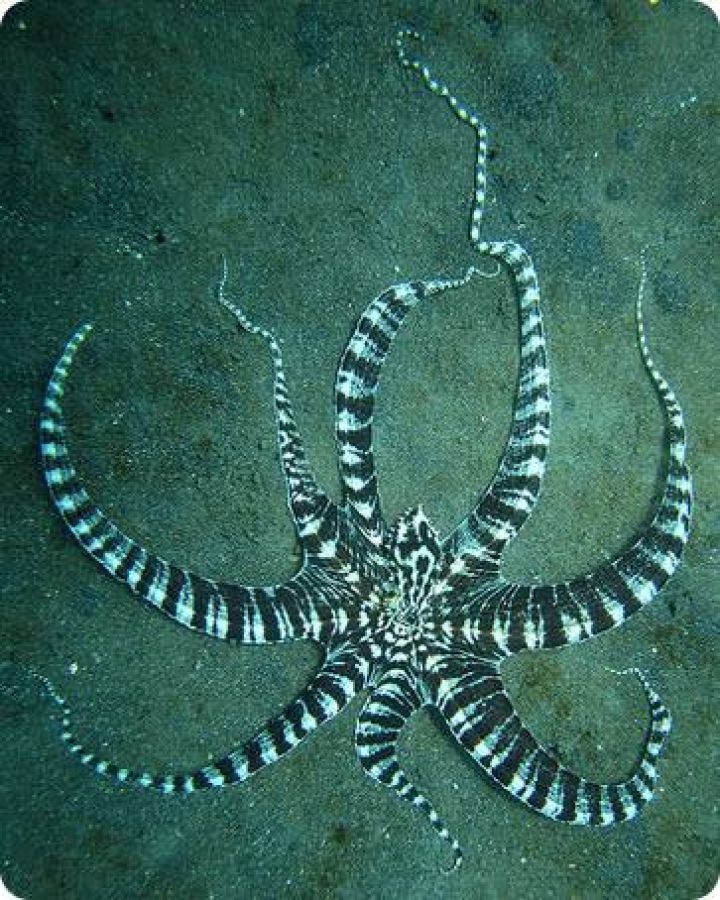
We turn our attention to the mimic octopus, a master of deception in the depths of Southeast Asian waters. With the uncanny ability to replicate the appearance and behavior of various marine creatures, this cephalopod demonstrates nature's ingenuity in crafting survival strategies that blur the lines between predator and prey. Together, these five marvels serve as a testament to the boundless creativity and adaptability of the natural world, inviting us to peer into the depths of Earth's wonders with newfound appreciation and wonder.
10 Strange and Mind-Blowing Nature Facts
- Immortal jellyfish revert to youth.
- Bombardier beetles shoot boiling chemicals.
- Venezuelan poodle moths are unique.
- Aye-aye has a special finger.
- Corpse flowers smell like rotting flesh.
- Pistol shrimp creates a sonic boom.
- Axolotl regrows entire limbs.
- Star-nosed mole has 22 appendages.
- Mimic octopus imitates other creatures.
- Banyan trees grow roots from branches.
1. Immortal Jellyfish Reverts to Youth
The Turritopsis dohrnii, commonly known as the immortal jellyfish, possesses an extraordinary ability to reverse its life cycle. After reaching maturity, instead of dying, it can transform back into its juvenile form. This process, known as transdifferentiation, involves the jellyfish's cells undergoing a remarkable reprogramming. The mature cells revert to a more primitive state, essentially resetting the organism's biological clock. This incredible feat allows the jellyfish to potentially live indefinitely, cycling between maturity and youth as needed. While environmental factors and stress play a role in triggering this transformation, the underlying genetic and biochemical mechanisms are still a subject of ongoing research.
2. Bombardier Beetle's Defense Mechanism
The bombardier beetle, a small insect found in various parts of the world, possesses a formidable defense mechanism that involves the controlled release of boiling chemicals. When threatened, the beetle mixes two separate chemical compounds stored in specialized glands within its abdomen. These compounds, typically hydrogen peroxide and hydroquinone, are then channeled into a reaction chamber where they combine and undergo an exothermic reaction. The resulting hot and noxious mixture is forcefully expelled from the beetle's abdomen, creating a high-pressure spray directed at its aggressor. This boiling chemical blast is not only effective at deterring predators but also serves as a potent example of nature's ingenuity in crafting intricate and highly specialized adaptations for survival.
3. Venezuelan Poodle Moth's Unique Appearance
The Venezuelan poodle moth, scientifically known as Artace sp., is a visually striking and enigmatic insect discovered in the Gran Sabana region of Venezuela. This moth gained notoriety for its fluffy, white appearance, which bears a curious resemblance to a cross between a moth and a poodle. While the exact species classification and ecological niche of the poodle moth remain a subject of debate among entomologists, its distinctive appearance has captured the imagination of both scientists and the public alike. This peculiar-looking moth serves as a testament to the vast diversity of life on our planet, showcasing how evolution can produce unexpected and visually captivating forms.
4. Aye-Aye's Specialized Finger
The aye-aye (Daubentonia madagascariensis) is a nocturnal primate native to Madagascar, known for its peculiar elongated middle finger. This finger, which is significantly longer than the others, serves a unique purpose in the aye-aye's foraging behavior. Equipped with a highly sensitive and flexible tip, the aye-aye taps on tree bark to locate hollow chambers. Once a hollow is detected, it gnaws a hole into the wood using its rodent-like incisors. The specialized finger then probes inside to extract insect larvae, a primary component of its diet. This adaptation showcases nature's remarkable ability to shape organisms in unconventional ways to exploit specific ecological niches, enabling species like the aye-aye to thrive in their environment.
5. Corpse Flower's Olfactory Deception
The titan arum (Amorphophallus titanum), commonly referred to as the corpse flower, is a botanical marvel native to the rainforests of Sumatra. It is renowned for its enormous inflorescence, which can reach heights of over three meters. What truly sets this plant apart, however, is its pungent odor, which closely mimics the stench of decomposing flesh. This olfactory deception is a strategic adaptation to attract carrion-loving insects, particularly dung beetles and flesh flies, which serve as pollinators. By luring these insects with the promise of a food source, the corpse flower ensures effective cross-pollination. This remarkable adaptation exemplifies how plants have evolved ingenious strategies to exploit their environments and ensure reproductive success in the natural world.
6. Pistol Shrimp's Sonic Boom Creation
The pistol shrimp, a small marine crustacean, possesses an extraordinary ability to create a powerful underwater shockwave. This feat is achieved through a specialized claw that acts like a natural pistol. When threatened or hunting for prey, the shrimp contracts its claw muscles, generating a high-velocity snap. The result is a cavitation bubble, a tiny void filled with vaporized water. When this bubble collapses, it produces a phenomenon known as sonoluminescence, emitting a brief burst of light and generating a sonic boom. The temperature inside the collapsing bubble can reach that of the sun's surface, creating an intense shockwave capable of stunning or even killing small prey. This remarkable adaptation showcases the shrimp's proficiency in utilizing physics to its advantage in the underwater world.
7. Axolotl's Regenerative Abilities
The axolotl (Ambystoma mexicanum), also known as the Mexican walking fish, is a species of salamander native to Mexico. What sets this amphibian apart is its extraordinary regenerative capacity. Unlike most vertebrates, which have limited regrowth abilities, axolotls can regrow entire limbs, spinal cord tissue, heart, and even parts of their brain. This remarkable feat is facilitated by a high concentration of progenitor cells, specialized for tissue regeneration. These cells enable the axolotl to heal wounds with near-perfect precision, making it a subject of extensive scientific research in the field of regenerative medicine.
8. Star-Nosed Mole's Sensory Snout
The star-nosed mole (Condylura cristata) is a small, burrowing mammal found in North America. Its most distinctive feature is its highly specialized snout, adorned with 22 fleshy, pink appendages resembling a star. These sensitive tendrils are equipped with thousands of touch receptors called Eimer's organs. This sensory array allows the mole to rapidly probe its environment and identify prey through touch, even in complete darkness. The star-nosed mole's extraordinary tactile abilities exemplify nature's capacity to craft specialized adaptations for survival in diverse ecological niches.
9. Mimic Octopus' Impersonation Skills
The mimic octopus (Thaumoctopus mimicus) is a cephalopod found in the waters of Southeast Asia. It possesses an uncanny ability to imitate the appearance and behavior of various marine creatures. Using its highly flexible body and exceptional color-changing abilities, the mimic octopus can mimic the forms of flatfish, lionfish, sea snakes, and even toxic creatures like lionfish or jellyfish. This remarkable mimicry serves as both a defense mechanism against predators and a means of hunting prey. By convincingly adopting the appearance of other, potentially more dangerous, animals, the mimic octopus can deter predators and approach prey more effectively.
10. Banyan Tree's Aerial Roots
Banyan trees (genus Ficus) are known for their unique growth pattern, which involves the development of aerial roots. These roots extend from the branches of the tree and grow downwards, eventually reaching the ground and anchoring themselves. Over time, multiple roots can form a complex network, creating a forest of interconnected trees. This adaptability allows banyan trees to thrive in a variety of environments, including coastal regions and tropical forests. The ability to develop aerial roots demonstrates the banyan tree's resilience and capacity to exploit its surroundings for growth and stability.
In conclusion, the wonders of the natural world never cease to amaze, offering a glimpse into the boundless creativity and adaptability that characterize life on Earth. From the pistol shrimp's explosive sonic boom to the axolotl's remarkable regenerative abilities, these marvels serve as a testament to nature's ingenuity in engineering solutions to the challenges of survival. The star-nosed mole's sensory snout and the banyan tree's network of aerial roots further exemplify the astonishing adaptations that enable organisms to thrive in their diverse habitats.
In celebrating these wonders, we are invited to embark on a deeper appreciation and understanding of the natural world, inspiring a collective responsibility to steward and safeguard the ecosystems that harbor such astonishing life forms. The tapestry of nature's marvels invites us to continue our exploration, always with a sense of wonder and gratitude for the incredible diversity that thrives around us.
